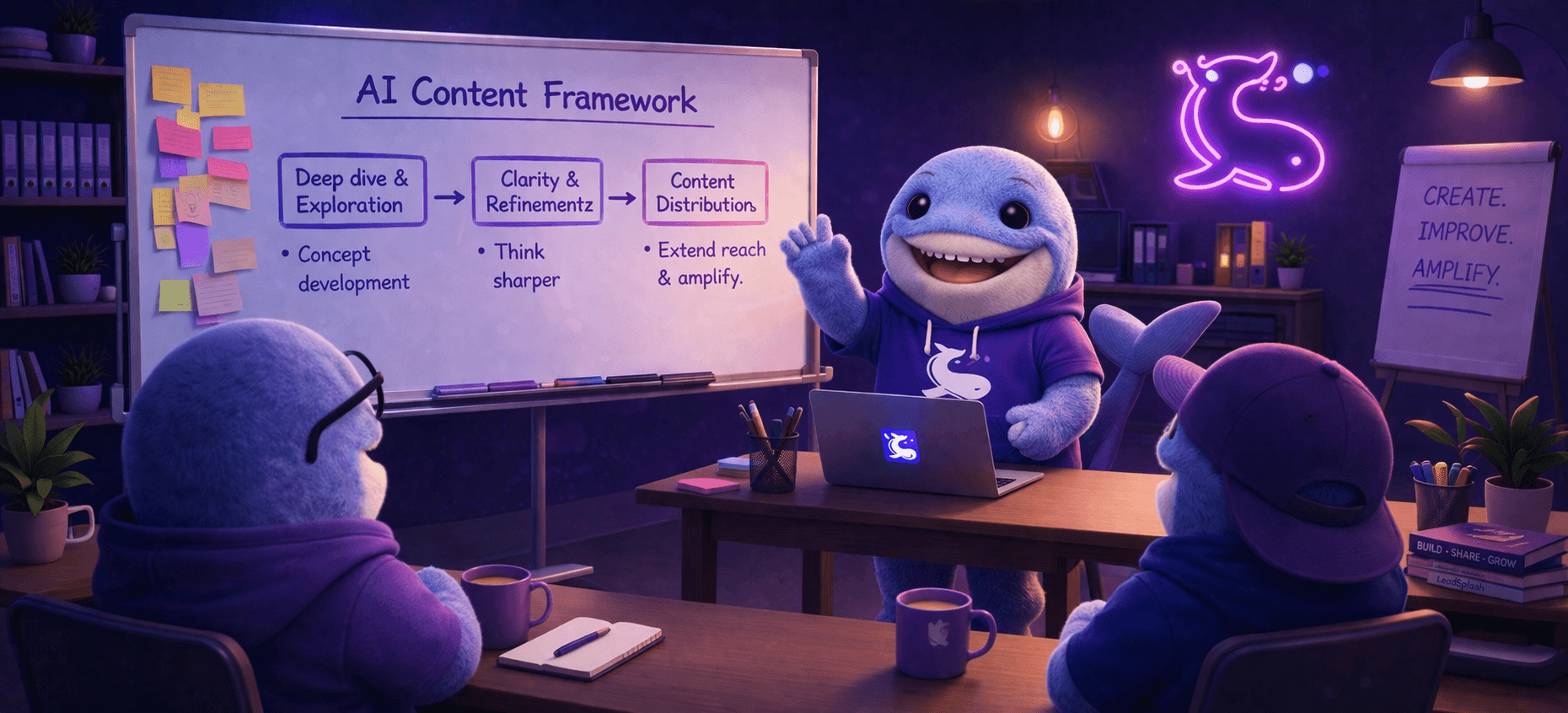
How AI actually supports B2B SaaS growth, without replacing your team
Why AI is often misunderstood in SaaS growth
Ai is frequently positioned as a shortcut to growth. More content, more leads, more efficiency, all without additional headcount. This framing creates unrealistic expectations. AI does not create clarity, positioning, or strategy. It amplifies whatever system is already in place.
If the foundation is weak, AI accelerates noise rather than results.
Where AI creates real leverage
Used well, ai increases execution speed and reduces manual effort.
It can support research, speed up content production, assist in data analysis, and improve experimentation velocity. These gains matter, especially for small teams operating with limited capacity.
The key is that ai operates within clearly defined boundaries. It supports decisions rather than making them.
Where AI does not replace humans
AI cannot decide which market to focus on, which icp to prioritize, or which trade offs to make.
Those decisions require context, judgment, and an understanding of long term consequences. They sit at the intersection of product, market, and business strategy.
When teams outsource these decisions to tools, growth becomes reactive and inconsistent.
AI works best inside focused go to market systems
The teams that benefit most from ai already have focus. They know who they are targeting, which motion they are running, and what success looks like. AI then helps them move faster within that system. Without focus, AI simply increases activity without improving outcomes.
Sustainable growth still depends on people
AI can increase leverage, but sustainable B2B SaaS growth still depends on people making clear choices and executing consistently. The most effective teams use ai to reduce friction, not to avoid thinking. They combine human judgment with automation in a way that strengthens their growth engine over time. AI supports growth when it is treated as infrastructure, not as a replacement for strategy.